
Atlas Flashing Replacement: The Dallas Owner’s Guide
We stock and install Atlas-compatible flashing replacement across Dallas, with most jobs running $280-$520 installed depending on roof pitch, accessibility, and whether adjacent shingles need resetting. Same-day service is available when you call before noon, and our trucks carry the common Atlas profiles used on North Texas homes from the 1990s forward. Most Dallas homeowners discover their Atlas flashing has failed after a hard rain leaves water staining the ceiling near a chimney, dormer, or wall intersection - sometimes months after the actual breach, since flashing deterioration tends to hide behind siding or under shingle courses until the water finds an interior path.
Which Atlas Models This Applies To
Atlas Roofing produces several shingle lines common in Dallas subdivisions, and flashing compatibility breaks down by the shingle’s exposure height and the corresponding metal profile. The Atlas StormMaster Slate, Pinnacle Pristine, and Castlebrook lines - widely installed in Plano, Richardson, and Garland from 2005 to 2019 - all use standard 4-inch exposure flashing, but the Atlas Briarwood Pro and certain architectural lines from the early 2000s require a 5-inch step flashing with a deeper kickout. The part number isn’t always visible once installed, so we identify the correct replacement by measuring the existing exposed leg and checking the shingle thickness at the butt edge.
For OEM Atlas flashing, you’re looking at galvanized steel in 26- or 28-gauge with a baked Kynar finish color-matched to Atlas’s standard palette. We also install quality aftermarket equivalents from Quality Edge and Tamlyn when the homeowner prefers, though we specify 24-gauge minimum for Dallas’s hail exposure - thinner metal dimples too easily. One compatibility gotcha we’ve seen repeatedly in Lakewood and East Dallas: Atlas’s 2008-2014 architectural shingles ran slightly thicker than spec, and standard flashing legs don’t seat flush without trimming the shingle edge. We check this on every Atlas flashing replacement to avoid the wind-driven leaks that show up two seasons later.
Signs Your Atlas Flashing Replacement Is Failing
- Water stains on interior ceilings or walls below roof penetrations. This is the most common first sign. The stain often appears nowhere near the actual breach because water travels along the flashing’s top edge or rafter tails before dropping, which is why a roof-level inspection with photos matters more than interior guessing.
- Rust streaks or green oxidation bleeding down the fascia or siding. Atlas’s Kynar-coated flashing holds up well, but once the coating is compromised at a fastener hole or bend, Dallas humidity accelerates corrosion. Those streaks mean the metal is actively failing and the seal is breached.
- Lifted or cupped shingles at wall or chimney intersections. When step flashing loses its fastening or the counterflashing separates, shingles lose their anchor point and curl from wind uplift. In Dallas’s spring storm season, this progresses from cosmetic to entry point within a few hard blows.
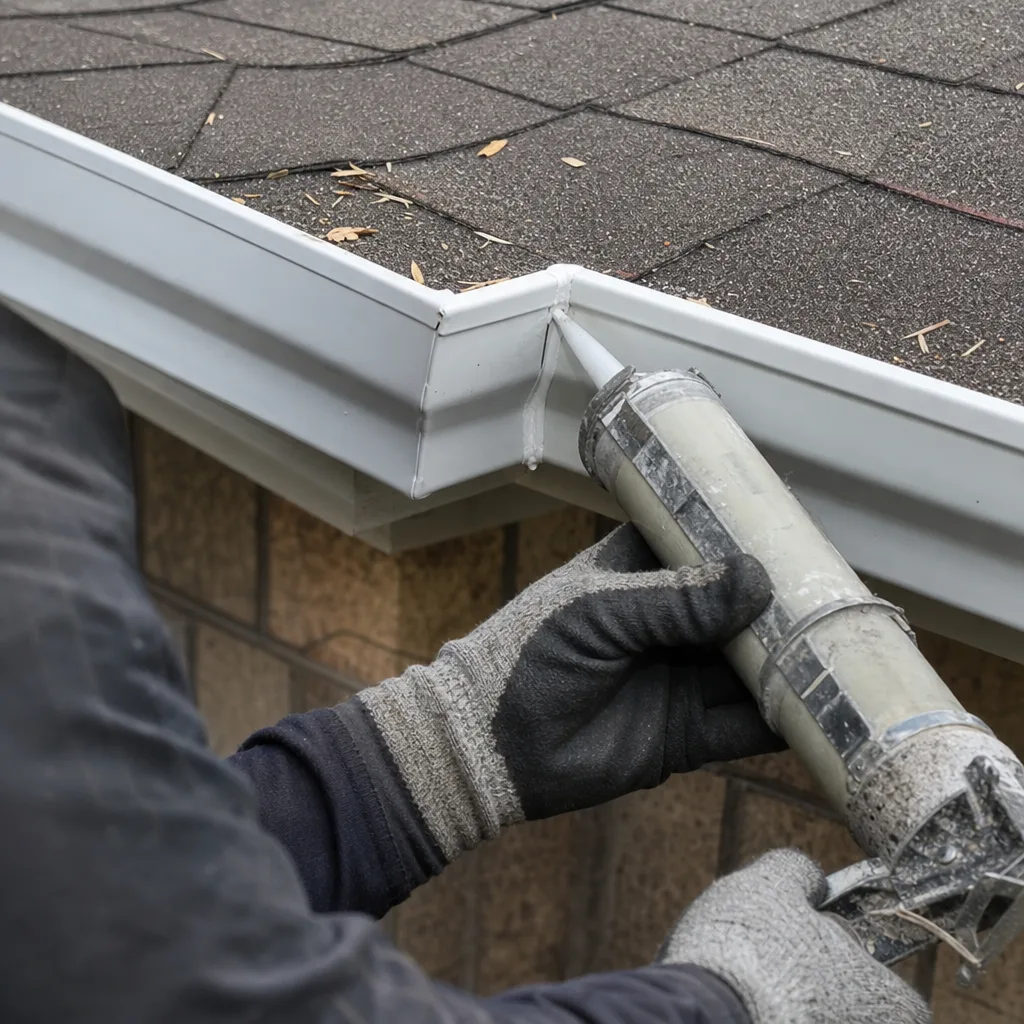
- Visible gaps where caulk or sealant has separated from the metal. Caulk is not a permanent flashing solution, yet we see it used as a stopgap on too many Atlas roofs. Once the bead cracks - and it always cracks in Texas heat - water follows the gap straight behind the flashing leg.
- Daylight visible from the attic at chimney or dormer corners. This means the flashing has pulled completely free or was never properly integrated with the underlayment. It’s an active leak waiting for the next rain, not a someday problem.
Replacement Cost & What’s Included
Atlas flashing replacement in Dallas typically falls between $280 and $520 per area installed. The low end covers a straightforward step-flashing run on a walkable pitch with standard 3-tab or architectural shingles that lift and reset cleanly. The higher end applies to steep pitches requiring toe boards, chimney saddle or cricket rebuilds, or situations where the adjacent Atlas shingles are too brittle to salvage and need partial replacement.
Every Atlas flashing replacement we perform includes removal of the failed metal, inspection of the underlying decking for rot, installation of new ice-and-water shield at the critical junction, and matching replacement flashing in gauge and finish. We reset your existing Atlas shingles where possible; if replacement shingles are needed, we source from our authorized Atlas inventory to maintain color consistency. Our 90-Day Done Right Promise covers the workmanship in writing - if water finds a path we missed, we come back and make it right, no paperwork runaround.
DIY or Call Us?
A homeowner can safely check for the symptoms above from the ground or attic, and we encourage it - catching a flashing failure early limits the repair scope. What we don’t recommend is ladder work at roof-wall intersections. These are precisely the areas where footing is least secure, where shingles are most brittle, and where a misstep means a long fall onto hardscaping or a corner. The flashing itself must integrate with the underlayment course and shingle weave; done wrong, it channels water straight into the wall cavity instead of over the metal.
We’re not affiliated with Atlas Roofing Corporation - we’re an independent Dallas roofing contractor that happens to stock their flashing profiles because they’re common on local roofs. If you’re seeing any of the signs above, call (888) 309-8379. We’ll send a background-checked, uniformed technician to document what your roof actually needs, quote it upfront, and in most cases complete the Atlas flashing replacement that same visit.
FAQs
How long does Atlas flashing last in Dallas weather?
Properly installed Atlas flashing with intact Kynar coating typically lasts 20-25 years in Dallas, but the 2011 and 2019 hail seasons accelerated failure on many North Texas roofs by denting the metal and compromising the coating at impact points. If your flashing is original to a 2000s-era install, it’s worth inspecting regardless of apparent condition. Call (888) 309-8379 for a free inspection with photos.
Can Atlas flashing be repaired instead of replaced?
Small sealant failures at fastener points can sometimes be addressed with proper metal-to-metal sealing, but once the flashing leg has corroded, bent, or lost its step integration, replacement is the only lasting fix. We’ve seen too many “repaired” flashings leak again within 18 months because the underlying metal fatigue wasn’t addressed. For an honest assessment of whether your Atlas flashing is salvageable, call us - estimates are free.
How long does the replacement take?
Most Atlas flashing replacements on a standard Dallas single-family home take 2-4 hours from ladder set to final cleanup. Chimney saddles or multiple wall intersections add time, but we still complete most jobs in a single visit. We don’t leave until the photos are taken, the site is clean, and you’ve seen the work. Call (888) 309-8379 to schedule - same-day availability when you call before noon.
Do you stock Atlas flashing on your trucks?
We carry galvanized step flashing, counterflashing, and chimney saddles in the profiles common to Atlas installations across Dallas, Garland, and Richardson. For color-matched Kynar finishes or specialty dimensions, we pull from our local supplier same-day - no waiting on shipping. If you know your Atlas shingle line and approximate install year, mention it when you call (888) 309-8379 and we’ll confirm stock before we roll.
Written by Clint Harwell, Owner, Ridgeline Roofing Co. of Dallas at Ridgeline Roofing Co. of Dallas, serving Dallas and nearby areas.