

Fast, Reliable Emergency & Storm Damage Across Cedar Hill
When hail starts hammering your roof at two in the morning, you need a crew that knows Cedar Hill, not a dispatcher in another state reading from a script. We’re Ridgeline Roofing Co., and we’ve been answering live calls around the clock since 2016. From the established neighborhoods off Belt Line Road to the hillside homes along the escarpment near Clark Road, we know the wind patterns, the building eras, and the specific ways storm damage shows up on Cedar Hill roofs. Most emergency calls from the 75104 and 75106 ZIP codes reach our dispatch in under two minutes, and our trucks are typically on site within the hour. Call (888) 309-8379 now - a real person will pick up.
Why Ridgeline Roofing Co. of Dallas Is Cedar Hill’s Preferred Emergency & Storm Damage Company
We’ve been driving to Cedar Hill for emergency calls since the late 1980s, back when much of the city’s housing stock was still going up. That longevity means something here. Homeowners in Cedar Hill remember the contractors who showed up after the 2012 hailstorm and the ones who vanished before the checks cleared. We’re still here. Our Emergency & Storm Damage in Cedar Hill work is backed by the same 90-Day Done Right Promise we’ve honored for over four decades - written, no paperwork runaround, no arguing.
Our response time to Cedar Hill averages under an hour for emergency tarp situations, and we maintain pre-stocked materials specifically for the escarpment’s wind conditions. Clint Harwell, who leads our company, insists that every technician sent to a Cedar Hill emergency call understands how the elevated terrain changes the job. That means heavier fastening schedules, impact-rated materials when available, and documentation protocols that insurance adjusters in Dallas County recognize and respect.
Our reviews from Cedar Hill customers consistently mention the same things: we answer the phone, we show up when we say, and we don’t leave until the roof is secured against the next storm. That’s not marketing language - it’s the standard Clint set in 1984, and we haven’t lowered it.
Our Emergency & Storm Damage Services in Cedar Hill
Emergency Tarp
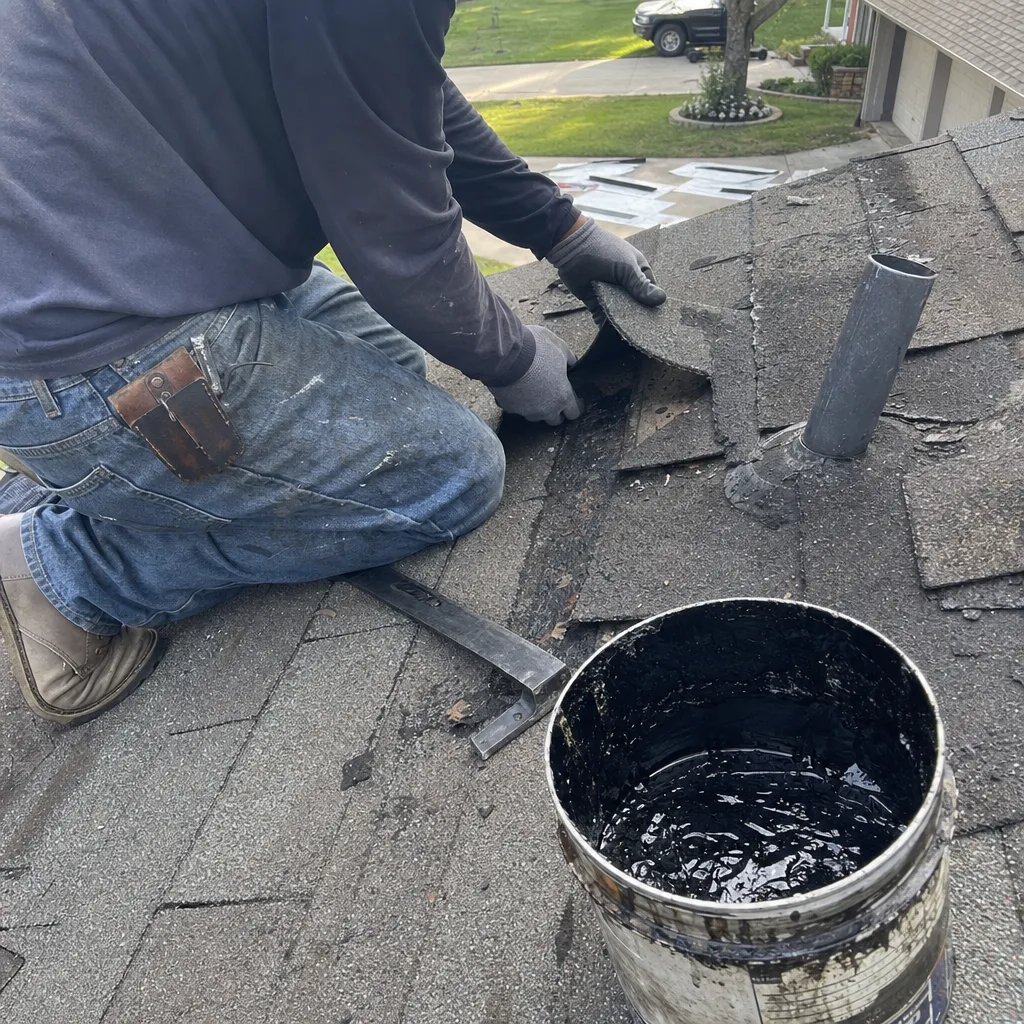
Emergency tarping in Cedar Hill is a different job than tarping in flat-terrain Dallas. Cedar Hill’s perch atop the Cedar Hill Escarpment exposes roofs to wind speeds 10-15 mph higher than the Dallas basin below, meaning emergency tarp jobs here routinely require extra fasteners and heavier-duty grommets to hold through the next squall line. During a March hail event, we responded to a home on Escarpment Drive where 2-inch hailstones had fractured the original 3-tab shingles on a steep south-facing slope. We installed a GAF WeatherWatch tarp using ring-shank nails driven into the OSB decking, then documented the loss for the homeowner’s insurance adjuster the next morning. Our standard tarp protocol for Cedar Hill includes edge-fastening with hurricane clips on all escarpment-facing slopes - a step many out-of-town crews skip, then wonder why their tarps failed by morning.
Hail Damage
North Texas hail season runs March through June, and the southwest Dallas County corridor including Cedar Hill regularly sees golf-ball-sized or larger stones. The city’s major residential buildout from the late 1980s through the mid-2000s left a large inventory of brick-veneer suburban homes now carrying 20-30-year-old 3-tab asphalt shingles that are at or past their rated service life. These aging shingles bruise, fracture, and lose protective granules far more readily than newer architectural products. On escarpment-facing slopes, hail-stripped shingles allow water to wick into the decking before a tarp can even be applied, causing hidden rot that isn’t visible from the ground. We inspect every hail call with photo documentation from the roof surface itself, not the driveway.
Wind Damage
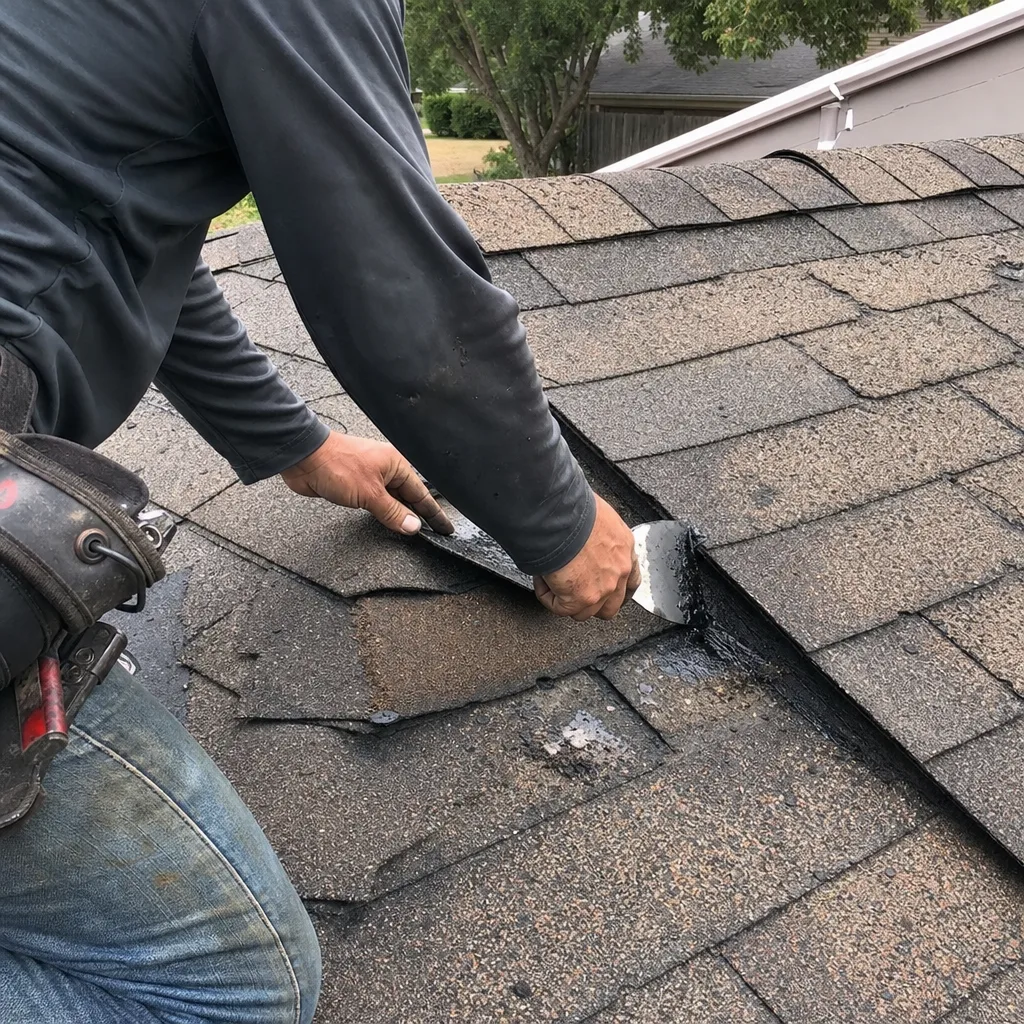
The escarpment elevation accelerates wind speeds during storm events compared to lower surrounding terrain, meaning uplift forces on Cedar Hill roofs are consistently higher than DFW regional averages. This makes proper decking fastening schedules and high-wind-rated underlayment not optional upgrades but practical necessities. Wind uplift from escarpment gusts pulls loose tarps off if they aren’t edge-fastened with hurricane clips, leaving the roof exposed again mid-storm. We see this failure mode repeatedly on homes where temporary repairs were done by crews unfamiliar with Cedar Hill’s terrain. Our wind damage assessments include checking for lifted shingle tabs, compromised ridge caps, and nail back-out - issues that often precede visible leaks by weeks or months.
Insurance Claims Assistance
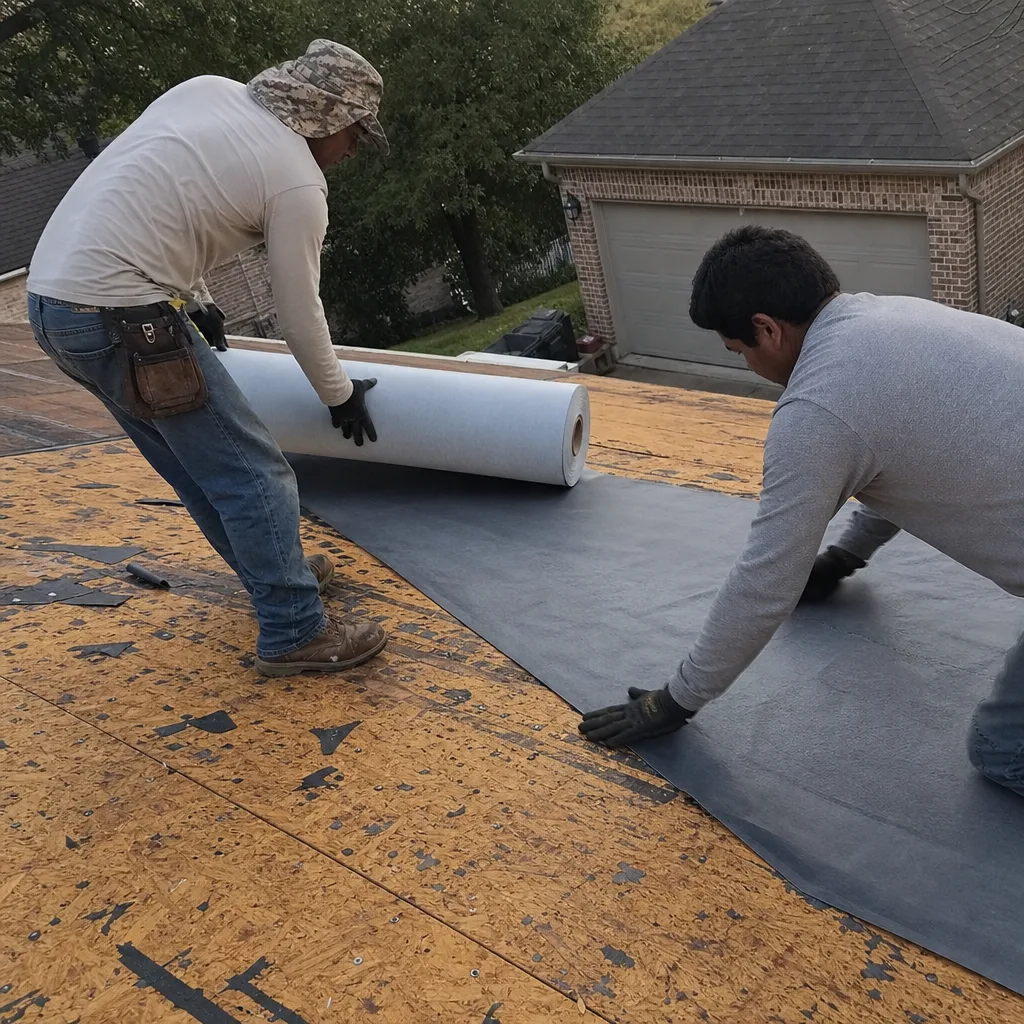
Storm damage claims in Cedar Hill move through Dallas County insurance offices, and adjusters here appreciate documentation that speaks their language. We provide date-stamped photo reports, material specifications for impact-rated upgrades when applicable, and repair estimates that itemize code-required upgrades separately from optional improvements. Our familiarity with Cedar Hill’s 1990s-era building practices helps us identify pre-existing conditions versus storm-caused damage - a distinction that keeps claims honest and moving. We do not negotiate with your insurer on your behalf, but we will meet the adjuster on your roof and explain what we found, with the photos to back it up.
What happens when you call
- 1
A real person answersNo phone trees - you reach a local pro.
- 2
You get an upfront price rangeHonest numbers before anyone is dispatched.
- 3
A background-checked tech heads outLicensed & insured, dispatched right away.
- 4
You approve before work beginsNothing starts until you say go.
Trusted Brands We Service in Cedar Hill
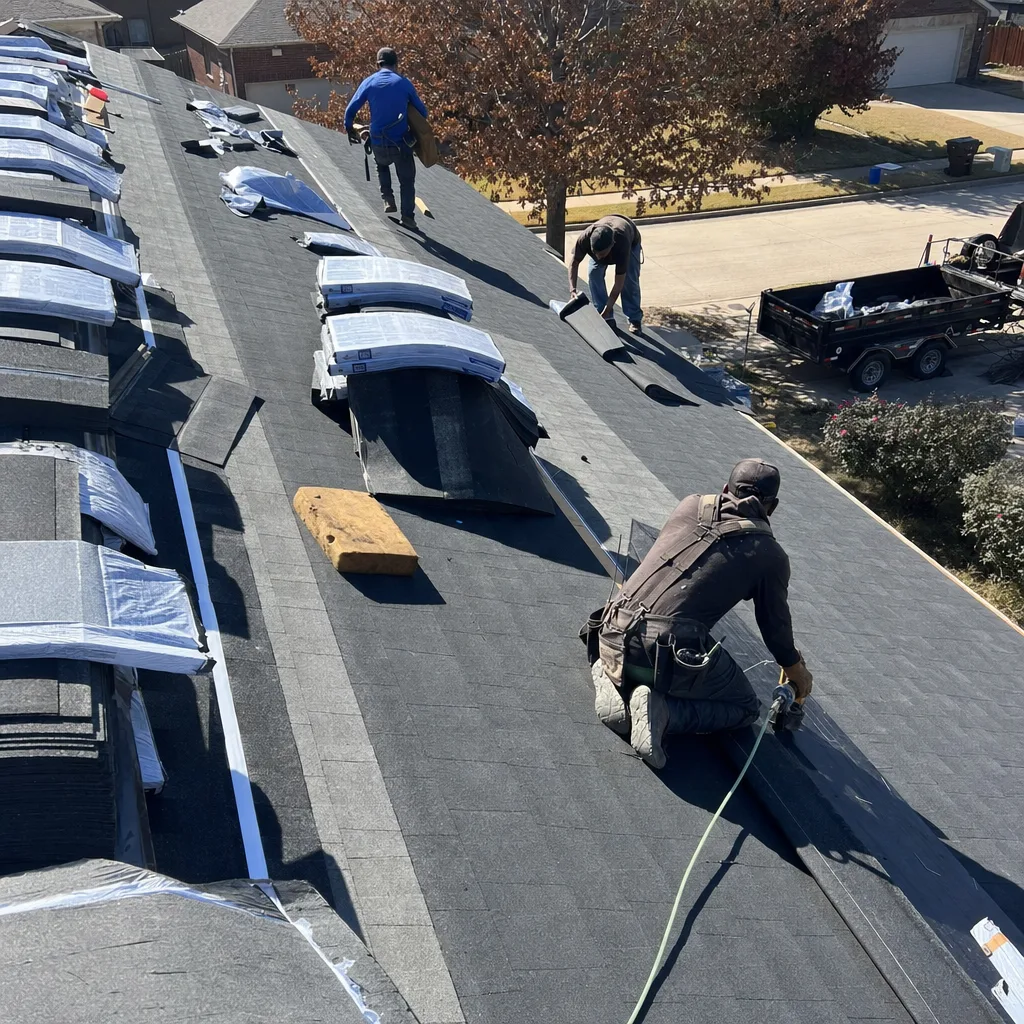
We stock emergency repair materials from multiple manufacturer lines so Cedar Hill homeowners aren’t left waiting for a special order while the next storm approaches. Our authorized installation credentials include GAF, CertainTeed, Owens Corning, IKO, Atlas, Tamko, and Boral - which means when we recommend a product for your repair or replacement, we’re not limited to whatever happens to be in the warehouse. For Cedar Hill’s wind-exposed conditions, we frequently specify Atlas StormMaster Slate or IKO Nordic shingles with Class 4 impact ratings, materials that earn their keep on escarpment properties where standard 3-tab products have already failed once. Local inventory and trained crews mean most emergency repairs in Cedar Hill are completed in a single visit.
Common Emergency & Storm Damage Problems We See in Cedar Hill Homes
- Hail-stripped shingles on escarpment-facing slopes. The combined effect of direct hail impact and higher wind exposure strips granules and fractures the asphalt mat on south- and west-facing slopes first. Water then wicks into the decking through microscopic cracks, causing rot that homeowners don’t discover until the ceiling stains appear.
- Split-level rooflines with complex drainage. Steeper hillside lots along the escarpment create split-level rooflines with varied pitch planes. Tarps must be overlapped on multiple planes, and leaks frequently develop at seam junctions where standard single-slope tarping techniques don’t account for water running sideways across a valley.
- Downhill-facing rear eaves draining toward the foundation. On properties built along the escarpment’s slope, we regularly find that the downhill-facing rear eaves drain water toward the foundation rather than away from it - an original grading and flashing shortcut from 1990s-era builders. Granule-stripped aging shingles stop shedding water fast enough to compensate, and suddenly the homeowner has both a roof problem and a foundation moisture issue.
- Wind uplift pulling compromised flashings. The escarpment’s amplified gusts exploit any existing weakness in step flashing, pipe boots, or ridge vent installations. We find wind uplift damage on Cedar Hill roofs that would have held fine in Duncanville or DeSoto, simply because the wind loading here is measurably higher.
Pricing for Emergency & Storm Damage in Cedar Hill, TX
A typical emergency tarp in Cedar Hill runs $350-$650 for a standard residential roof area up to 500 square feet, with escarpment hillside lots at the higher end due to extra fastening requirements and safety rigging. Hail damage repair on a localized section of 3-tab shingles generally falls between $800 and $2,400, depending on whether the decking beneath has absorbed moisture. Full wind damage mitigation - replacing lifted sections, re-securing decking, and installing high-wind-rated underlayment - typically ranges from $1,800 to $5,500 for Cedar Hill homes in the 2,000-3,000 square foot range.
What moves the number: roof pitch (steeper costs more for labor and safety), accessibility for material staging on hillside lots, and whether the damage is isolated or has allowed secondary water intrusion into the decking or insulation. We provide no-hassle upfront pricing - the number on the estimate is the number on the invoice. Estimates are free, and we document everything with photos so you understand what you’re paying for. Call (888) 309-8379 for an exact quote on your specific situation.
We Also Serve Cities Near Cedar Hill
Our Emergency & Storm Damage response radius covers DeSoto to the northeast, Glenn Heights to the south, Midlothian to the southwest, and Grand Prairie to the northwest. While each community has its own character, Cedar Hill’s escarpment terrain creates unique conditions that our crews are specifically trained to address. Homeowners in these neighboring cities receive the same live-answer dispatch, same photo-documented inspections, and same 90-Day Done Right Promise.
Serving Cedar Hill, TX - Our Local Coverage Area
We’re based in the Cedar Hill area and know this community well. Use the map below to see our service coverage - if you’re nearby, we can almost certainly help.
FAQs - Emergency & Storm Damage in Cedar Hill
Within hours, not days. The escarpment’s amplified wind speeds mean an unprotected roof in Cedar Hill takes on water faster and loses temporary protection more readily than homes in lower terrain. Our live dispatch answers 24/7, and we prioritize Cedar Hill calls for same-day tarp installation with escarpment-rated fastening. Call (888) 309-8379 - estimates are free, and the tarp buys you time to assess full repair options without interior damage.
Most 3-tab shingles at 20-plus years in Cedar Hill are past their rated service life, and patching is often throwing good money at bad material. A localized repair runs $800-$2,400, while a full replacement with impact-resistant architectural shingles typically falls between $8,500 and $14,000 for a standard Cedar Hill home. If your shingles are brittle, cracking at the edges, or losing granules to the point the black asphalt mat shows through, replacement is the square deal. We’ll inspect and give you an honest assessment - no pressure, just the condition as we find it.
Sometimes, but it depends on your policy language and the adjuster’s interpretation. Most standard policies cover “like kind and quality” replacement, meaning they’ll pay for 3-tab shingles to replace 3-tab shingles. The upgrade to Class 4 impact-resistant products - which we strongly recommend for Cedar Hill’s hail frequency - typically leaves a homeowner-pays gap of $1,200-$3,000 depending on roof size. We document the upgrade recommendation with manufacturer specifications and local hail-frequency data, which some insurers accept as justification for full upgrade coverage. We don’t promise your insurer’s response, but we make the case with facts and photos.
Three factors: wind loading, drainage complexity, and access. Escarpment wind speeds run 10-15 mph higher, requiring more fasteners and higher-rated materials. Split-level rooflines on hillside lots create valleys and pitch changes where water runs unpredictably, demanding more sophisticated flashing and tarp overlap techniques. And staging materials on a steep driveway or restricted backyard adds labor time that flat-lot jobs don’t encounter. Our crews train specifically for these conditions - it’s why we send experienced technicians to Cedar Hill, not rookies learning on your roof.
Look for lifted or creased shingle tabs along the ridge and rake edges, especially on the escarpment-facing slopes. Check your yard for loose granules after storms - heavy granule loss often indicates shingle flexing from uplift. From the ground with binoculars, you may see nails backing out or ridge cap pieces displaced. But the most reliable check is a roof-level inspection, which we provide free. Wind uplift damage frequently hides for weeks before water finds its path. If you suspect it, call (888) 309-8379 and we’ll document what we find - no charge for the look, and you’ll know where you stand before the next storm.
Storm damage doesn’t wait for business hours, and neither do we. Call (888) 309-8379 any time - day, night, weekend, or in the middle of the next squall line. A live person will answer, dispatch a background-checked, uniformed technician, and get your Cedar Hill roof secured with methods that account for the escarpment’s real conditions. Estimates are free, pricing is upfront, and every job carries our written 90-Day Done Right Promise. Done right - and if it’s not, we make it right.
Written by Clint Harwell, Owner at Ridgeline Roofing Co., serving Cedar Hill and Dallas-area communities since 2016.